

All patterns
Our team of blacksmiths create these patterns using traditional techniques that have merged with the latest stainless steel technologies making for a product that will make your artistry shine

Damasteel® is a premium stainless Damascus steel, reimagined. Forged from powder metallurgy technology, it fuses corrosion resistance and razor-sharp edge retention. Steel built for knives, jewelry, and watches that are meant to be looked at as much as used.
Our high-alloy Damascus steel is stainless, durable, strong, and free from the corrosion that troubles conventional Damascus. We are the only Damascus steel producer in the world to use powder metallurgy, a process patented by Damasteel®. What comes out of the forge carries the touch of blacksmiths for whom this is more than a trade.
Traditional Damascus steel is prized for its pattern and feared for its upkeep. Ours keeps the pattern and removes the compromise.
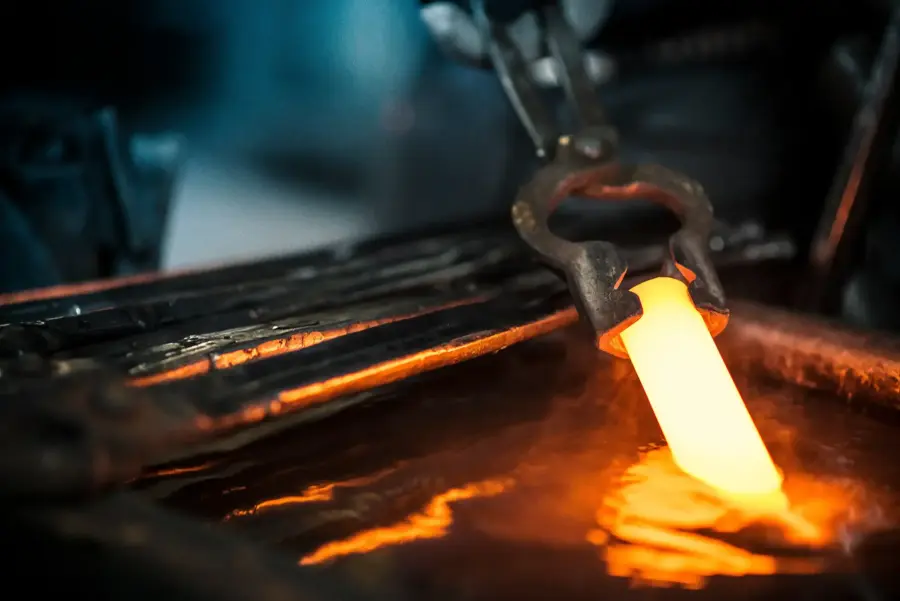
Powder metallurgy starts differently: molten steel is atomized into fine powder, then bonded under heat and pressure into a solid ingot. The result is a steel with a more homogeneous structure and better properties than steel of the same composition made the conventional way.
That homogeneity is what makes a genuinely stainless Damascus pattern possible — the high-chromium alloys that resist rust can be combined into patterns without the weak points that hand-forging would introduce.
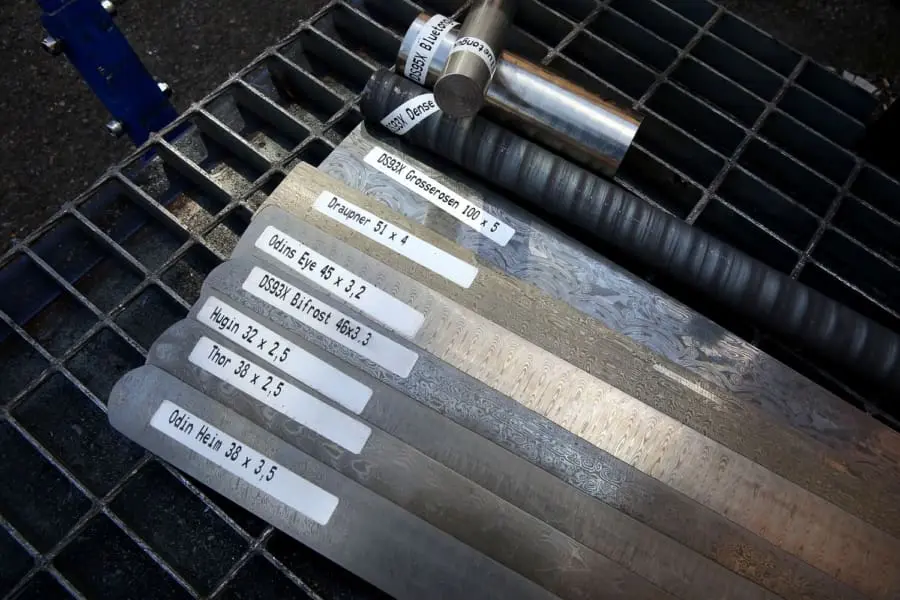
When planning a Damasteel blade, there are three distinct steels to choose from. The first is RWL34™, our traditional powder-based, unpatterned steel, available in billets or sheet stock. The second is DS93X™, Damasteel’s stainless Damascus-patterned steel, a powder-based combination of two martensitic stainless alloys, RWL34™ and PMC27™, each with a minimum chromium content of 13 percent. DS93X™ suits a wide range of knife-making applications and comes in over 25 distinct patterns, including a sheet variant. The last is Damacore®, a patterned stainless Damascus with a solid core, made from the same RWL34™ and PMC27™ alloys around a core of either RWL34™ (DC18N, bright grey) or N11X™ (DC21R, dark grey).
| Steel Alloy | Main Characteristics | Corrosion Resistance | Edge Retention | Best Applications |
| RWL34™ | Unpatterned, extreme strength and purity. | High (⭐⭐) | Exceptional (⭐⭐⭐) | Pocket knives, Hunting knives, Hard-use blades |
| DS93X™ | Damascus pattern steel, ultimate beauty and performance. | Exceptional (⭐⭐⭐) | High (⭐⭐) | Culinary knives, EDC, custom blades |
| Damacore® DC18N + DC21R | Core steel with Damascus cladding. The best of both worlds. | Exceptional (⭐⭐⭐) | Exceptional (⭐⭐⭐) | Premium custom knives, High-end culinary blades |

Developed by the experts behind DS93X™, this official Heat Treatment Guide delivers precise factory parameters for austenitizing, quenching, and tempering. Use it as your trusted metallurgical reference to achieve consistent results, outstanding toughness, long-lasting edge retention, and exceptional corrosion resistance..
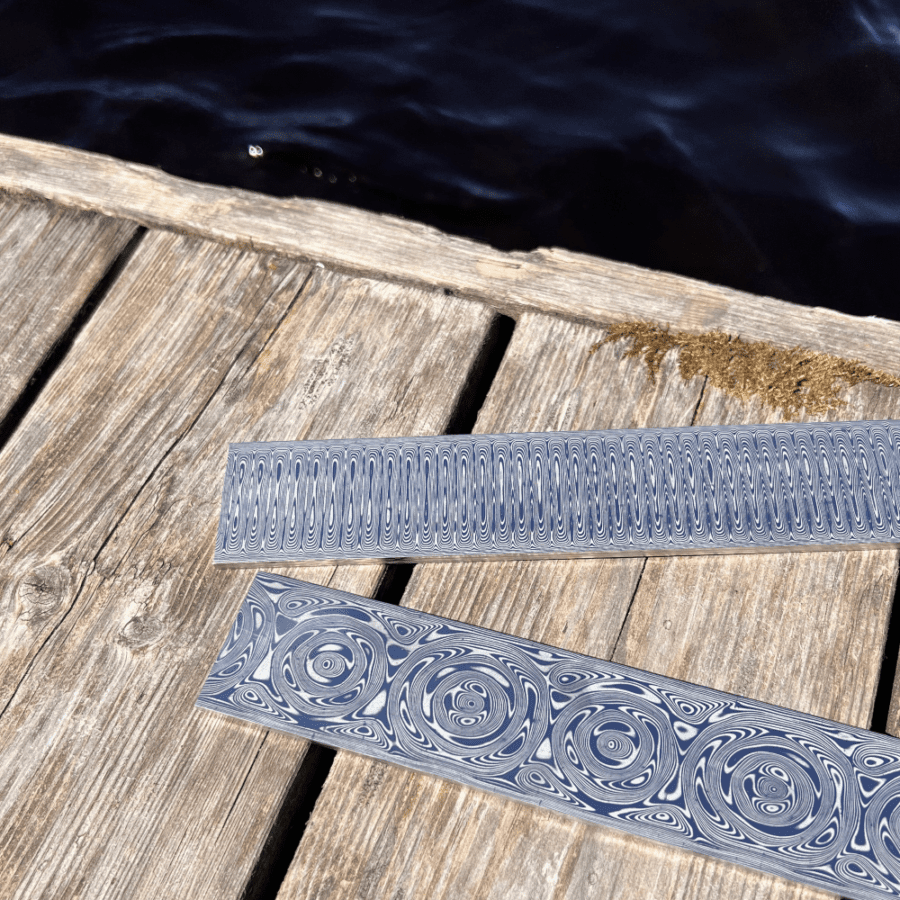
Etching is the final step in the DS93X™ process once optimal hardness has been achieved through correct heat treatment. By revealing the contrast between the bright RWL34™ and dark grey PMC27™ layers, etching transforms the steel into the striking patterned material for which Damasteel® is renowned.

Our facility is located in the historic and picturesque village of Söderfors, home to over 300 years of steel manufacturing. We take great pride in continuing that tradition — and in having as little impact on the surrounding environment as possible, so future generations can carry it on.
Environmental responsibility isn’t a marketing line for us; it’s a standing question in every decision we make. Our facility runs on electric kilns; we prioritize electric vehicles wherever the infrastructure allows, and we flush our toilets with river water instead of drawing on the municipal supply. On the material side, the powder metallurgy steel we source from Erasteel is produced from over 91% recycled material and is 100% recyclable, and only travels a few hundred meters between our forge and theirs. So the steel itself carries that same commitment before it ever reaches our doors.
Stainless Damascus steel is Damascus steel made from corrosion-resistant alloys. It is a steel that keeps the traditional Damascus pattern running through the entire piece, but uses steel grades that are stainless, making the final piece rust-resistant.
To qualify as stainless, an alloy needs a minimum of 13% chromium content, which is what gives the steel its corrosion resistance in the first place. Not all Damascus is stainless; most traditional, hand-forged Damascus is made from high-carbon steel chosen for how well it forge-welds and takes a pattern, not for corrosion resistance. Producing a Damascus pattern from stainless alloys is a harder metallurgical problem, since chromium-rich steels don’t always forge-weld or etch the way traditional carbon steel does.
That’s where Damasteel®’s powder metallurgy process comes in: we start with gas-atomized stainless steel powder rather than stacked bars, the pattern can be built from fully stainless alloys without the weld inconsistencies hand-forging would introduce, which produces a Damascus pattern that’s stainless all the way through.
Discover how stainless Damascus steel is made
Learn how Damasteel’s powder metallurgy process creates stainless Damascus steel with a consistent pattern throughout the material.
Explore the process →
No, traditional Damascus steel is not stainless. Blacksmiths forge-weld classic Damascus from high-carbon steels, chosen for how well they weld and take a pattern, not for corrosion resistance. Without regular oiling and drying after use, it will rust and stain or patina.
Building a genuine Damascus pattern from chromium-rich alloys is harder than it sounds, since those alloys don’t forge-weld or etch the same way traditional carbon steel does. That’s why most Damascus on the market, especially hand-forged pieces, still relies on high-carbon steel rather than stainless.
Damasteel® stands out as a notable exception. Using powder metallurgy instead of traditional forge-welding, it produces a genuinely stainless Damascus pattern that runs fully through the material, without the corrosion trade-off classic Damascus requires.
No, Damasteel® is stainless steel, so it resists rust far better than traditional Damascus. Its alloys carry a minimum of 13% chromium, the threshold that defines stainless steel and gives it strong resistance to corrosion from moisture, humidity, and everyday contact. This gives it a major advantage over conventional Damascus, which typically relies on high-carbon steel and will rust and stain without regular oiling and drying after use.
That said, “stainless” doesn’t mean “rust-proof.” No steel is completely immune to corrosion under extreme conditions. Prolonged exposure to saltwater, acidic substances, or skipping a dry-off after heavy use can still cause surface spotting over time. Basic care, wiping the blade dry and avoiding long-term storage in humid conditions, keeps a Damasteel® blade rust-free for a lifetime of use.
In practical terms, you can use, clean, and store a Damasteel® blade like any quality stainless knife.
Damasteel® is different because it’s the only Damascus steel producer in the world to make its patterned steel through powder metallurgy a patented process, not a variation on traditional hand-forging. That single difference in manufacturing changes almost everything else about the steel.
It’s genuinely stainless. Traditional Damascus is pattern-welded from high-carbon steel and will rust without regular oiling. Damasteel®’s alloys carry a minimum of 13% chromium, giving real corrosion resistance without sacrificing the pattern.
The pattern is cleaner and more consistent. Because the steel starts as gas-atomized powder rather than stacked bars, there are no weld seams and far fewer inclusions or impurities than in conventionally cast steel. Patterns can be engineered and repeated reliably, over 25 named patterns — rather than varying blade to blade the way hand-forged Damascus does.
It’s backed by Swedish steelmaking heritage. Our steel is produced in Söderfors, a Swedish village with over 300 years of steel manufacturing history — the same metallurgical tradition that helped pioneer stainless steel and powder metallurgy in the first place.
It’s engineered for the application, not just the look. With seven distinct alloys, Damasteel® can be matched to what a piece actually needs — edge retention for a knife, durability for a watch component, strength for a barrel — rather than offering one steel for every use case.
The craftsmanship still matters. Powder metallurgy gives our blacksmiths a superior starting material, but the final pattern, edge, and finish are still shaped by hand — so every piece carries both engineered consistency and individual character.
Discover the steel behind the difference
Explore Damasteel’s stainless Damascus steels and find the right alloy for your application.
Explore our steel alloys →
Yes, Damasteel® is real Damascus steel, made using a modern process. The name “Damascus steel” originally referred to ancient wootz steel, a technique lost since the 1700s. Today, the term almost always describes pattern-welded steel: two or more steel types forge-welded together and folded repeatedly until a pattern runs through the entire blade, not just the surface. That holds true whether the steel comes from traditional hand-forging or, as with Damasteel®, through powder metallurgy.
The difference lies in how the layers come together. A traditional blacksmith stacks and hammer-welds solid bars of steel. Damasteel® starts as gas-atomized steel powder, bonded under heat and pressure through Hot Isostatic Pressing (HIP), a patented process that leaves no welds and none of the impurities that conventional casting can introduce. The result is a pattern that runs edge to edge through the whole billet, exactly like traditional Damascus, but with a cleaner structure and, critically, full stainless corrosion resistance that conventional Damascus can’t offer.
Read more about the process of making Damasteel >>
Makers use Damasteel® far beyond kitchen and pocket knives. Across our range of alloys, they choose the steel for knife blades, jewelry, watch components, firearm barrels, and decorative design pieces, anywhere a maker wants a distinctive, permanent pattern combined with real functional performance.
Knives: Damasteel®’s stainless Damascus is the most common application. Custom knifemakers and larger manufacturers alike prize it for blades that hold an edge and resist corrosion without the upkeep traditional Damascus demands.
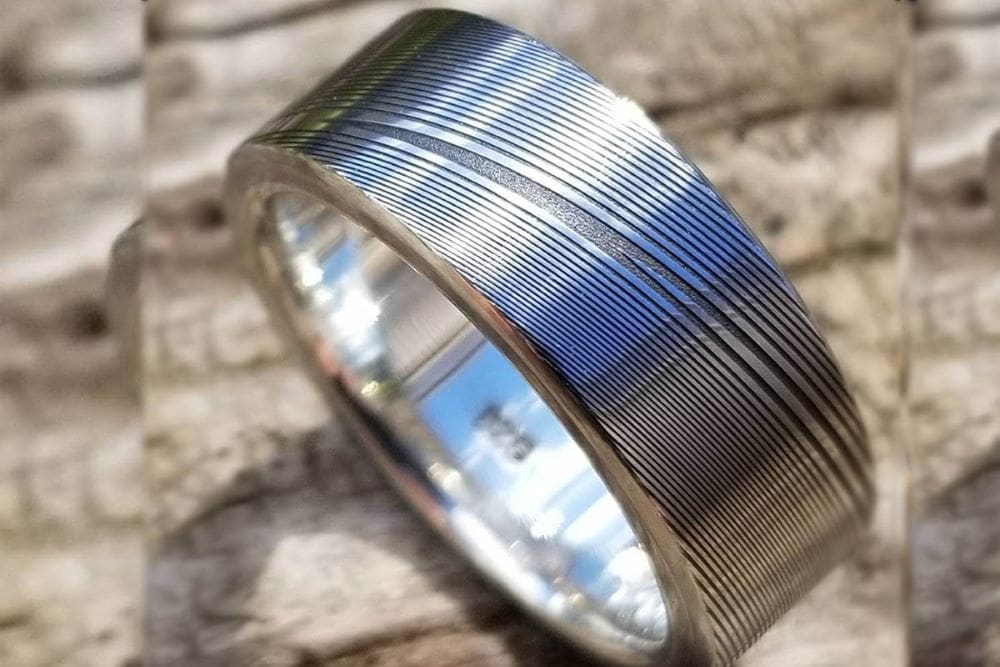
Jewelry: The same forged pattern that defines a blade also makes a striking ring, pendant, or watch bezel. Because the pattern runs all the way through the material, it never wears away or fades with polishing.
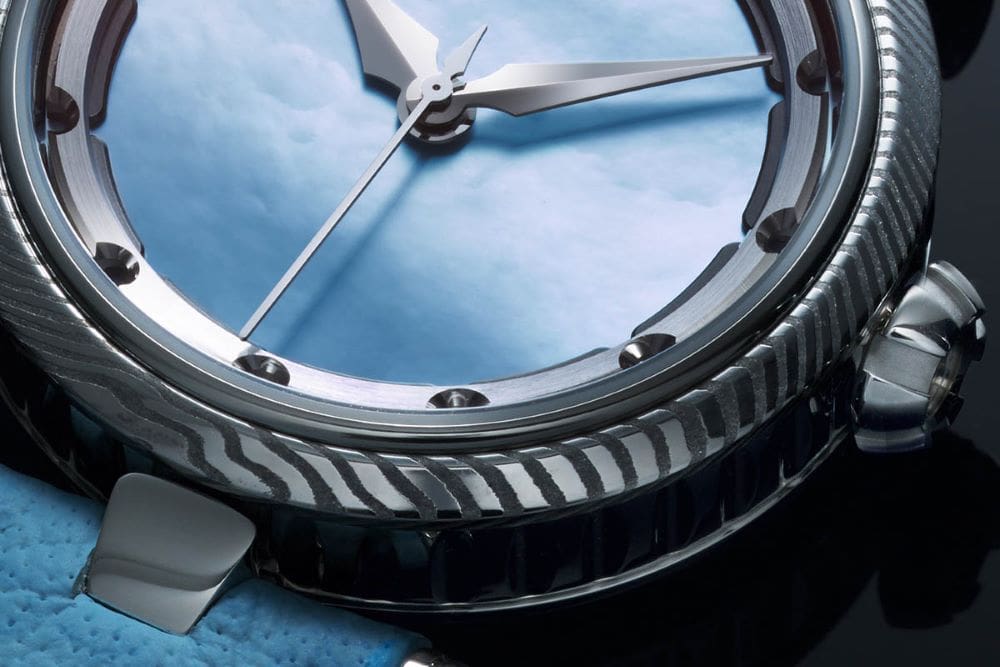
Watches: Watchmakers choose Damasteel® for cases, dials, and bezels when they want a pattern that’s genuinely one-of-a-kind, not printed or plated.
Arms barrels: Select alloys deliver the strength and precision firearms require, while still carrying the signature Damascus pattern.
Design and decorative objects: From pens to architectural and industrial accents, makers use Damasteel® anywhere a permanent, patterned metal adds character to an object.
With seven distinct alloys in the range, each is suited to a different combination of hardness, corrosion resistance, and pattern style — so the right choice depends on whether the piece needs to take a razor edge, withstand daily wear as jewelry, or meet the tolerances of a watch movement or barrel.
Yes. Damasteel® offers hypoallergenic stainless Damascus steel suitable for applications where the material comes into direct contact with the skin, such as jewelry. Its corrosion-resistant properties make it particularly well suited for these applications.
Discover how stainless Damascus steel combines distinctive patterns, corrosion resistance and hypoallergenic properties for jewelry applications. Explore Damascus Steel for Jewelry →